
Marshall Health Network reaches 500th robotic bronchoscopy milestone
Sunday, August 16, 2026
New dye marking technique further advances precision lung cancer care
Marshall Health Network (MHN) has reached another milestone in advanced lung cancer care, completing its 500th robotic bronchoscopy using the MONARCH™ platform across Marshall Health Network.
The milestone reflects the continued growth of MHN’s robotic bronchoscopy program, which gives physicians the ability to navigate deep into the lungs to reach and biopsy small, difficult-to-access nodules. Marshall Health Network-Cabell Huntington Hospital (CHH) was among the first hospitals in the nation to adopt MONARCH robotic technology and, in 2025, became the first hospital in West Virginia to perform a bronchoscopy using MONARCH™ QUEST, an AI-enhanced version of the technology designed to increase precision and diagnostic confidence.
Yousef Shweihat, M.D., interventional pulmonologist and professor at the Marshall University Joan C. Edwards School of Medicine, has performed most of the procedures since the program's inception. He was recently joined by Kamal Rikabi, M.D., pulmonologist and assistant professor at the Joan C. Edwards School of Medicine, further expanding access to the technology for patients throughout the region.
The team also recently completed its first robotic bronchoscopy with dye marking, a technique that helps surgeons pinpoint small lung lesions that can be difficult to locate during surgery. Using the robotic bronchoscope, physicians place a small amount of dye near the lesion, creating a temporary marker that guides the surgeon to the precise area.
The technique is particularly valuable for nodules as small as 6 millimeters, approximately the size of the head of a tack, which can be difficult to locate during surgery. Dye marking can reduce time under anesthesia and help preserve healthy lung tissue by allowing for a more targeted resection.
Reaching 500 robotic bronchoscopies is an important milestone and a reflection of what this technology means for our patients,” said Shweihat. “By investing in advanced tools like robotic bronchoscopy, we’re giving our physicians greater ability to detect and diagnose lung cancer earlier and more precisely, when patients may have more options for treatment.
Lung cancer remains the leading cause of cancer-related death in the United States. Early detection can significantly improve outcomes, making technologies that help physicians identify and diagnose small lung nodules an important part of lung cancer care.
Marshall Health Network offers low-dose CT lung cancer screenings without a referral. To schedule an appointment, call 304.781.LUNG (5864).
More news...
Marshall Health Network welcomes two medical oncologists to Edwards Cancer Institute

Marshall Health Network adds advanced therapy for stroke survivors

Marshall Health Network to offer free drive-thru flu shot clinics
Marshall Health Network awarded Rural Health Transformation Program Grant for workforce health initiative

Marshall Health Network partners with ElimiNATION Awareness Tour to offer free hepatitis C screenings
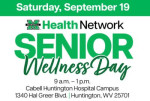
Marshall Health Network to offer flu shots, health screenings at Senior Wellness Day Sept. 19

Marshall Health Network to host period education workshop