
Marshall Health Network, Huntington City Mission open West Virginia's first medical respite care facility
Friday, November 13, 2026
Marshall Medical Respite provides transitional medical care and behavioral health support for individuals experiencing homelessness.
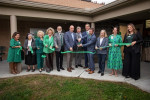
Marshall Health Network (MHN), the Marshall University Joan C. Edwards School of Medicine and the Huntington City Mission today marked the opening of West Virginia's first medical respite care facility, providing a new level of support for individuals experiencing homelessness who need a safe place to recover from illness or injury.
Located at 625 11th Street in Huntington, adjacent to the Huntington City Mission, Marshall Medical Respite will begin accepting patients Dec. 4, in accordance with specific admission criteria. The facility combines short-term residential medical care with psychiatric triage services.
Medical respite care serves individuals who are too ill or frail to recover on the streets or in shelters but do not require hospital-level care. Patients receive medical oversight, care coordination and assistance connecting with community resources to support their recovery and continued well-being.
“At its heart, this program is about dignity,” said Adam M. Franks, M.D., professor and chair of family and community health at the Joan C. Edwards School of Medicine and inaugural medical director of Marshall Medical Respite. “We know that healthy communities require more than excellent hospital care. They require compassion. They require collaboration. And they require a willingness to meet people where they are and help them get where they want to be.”
The 24-hour facility includes 10 medical respite beds and five psychiatric triage chairs. Operating under the direction of the department of family & community health at the Joan C. Edwards School of Medicine, the program provides nursing support, medication management, coordination of follow-up appointments, meals and access to hygiene facilities. Case management and referrals to behavioral health, substance use treatment and housing resources help patients manage their recovery and plan for continued care.
Psychiatric triage services provide short-term observation, assessment and stabilization for individuals experiencing behavioral health crises who do not require inpatient psychiatric hospitalization. Together, these services are designed to reduce emergency department visits and hospital readmissions while improving continuity of care.
For the Huntington City Mission, the facility expands its ability to address the complex medical and behavioral health needs of individuals experiencing homelessness beyond traditional shelter services.
“For many of the people we serve, having a safe place to recover from an illness or injury can make all the difference,” said Steven Little, executive director of the Huntington City Mission. “This facility reflects the shared commitment of our community partners and the many supporters who helped make it possible. Together, we're providing a level of care and support that will make a meaningful difference in people's lives.”
The facility was made possible through public funding, philanthropic support and community partnerships, including contributions from Marshall Health Network, the Pallottine Foundation of Huntington, the Claude Worthington Benedum Foundation, Highmark Foundation and Encova Foundation of West Virginia that supported its development and will help sustain operations.
Beginning Dec. 4, Marshall Medical Respite will accept patients who meet the program's admission criteria, with admissions available daily from 8 a.m. to 5 p.m.
During the initial phase of operations, referrals will be limited to Marshall Health Network providers as the program finalizes its admission, discharge and continued-stay processes. Referral criteria and procedures will be shared with additional approved referral partners as the program expands.
For more information, visit marshallhealth.org/medical-respite or call 681-358-HEAL (4325).
More news...
Marshall Health Network, Huntington City Mission open West Virginia's first medical respite care facility
Marshall University, Marshall Health Network to receive nearly $13 million for rural health transformation initiatives

Stay on Your Feet: Preventing Slips and Falls in Cold Weather

Marshall Health Network names Joshua Weber chief pharmacy officer

Marshall Health Network's Center for Surgical Weight Control earns Optum Center of Excellence designation

Marshall Health Network hospitals earn national recognition for clinical excellence from Healthgrades

Jason Southall named chief advanced practice provider for Marshall Health Network