
The Edison Histotripsy System
Fighting liver cancer with the power of sound
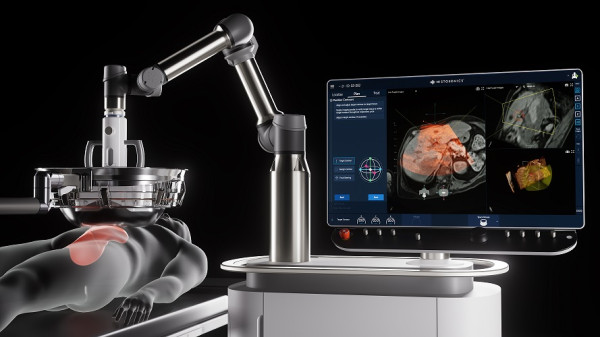
Cabell Huntington Hospital is the first hospital and only in West Virginia to treat liver tumors with the Edison® Histotripsy System, a completely non-invasive technology that liquifies tumors without surgery, chemotherapy or radiation.
This groundbreaking technology offers a new treatment option for patients who may not be candidates for traditional surgery or other therapies.
What is histotripsy?
Histotripsy is an FDA-cleared treatment that uses focused, pulsed sound waves to target and destroy liver tumors. The Edison system is an image-guided sonic beam therapy that enables physicians to deliver highly precise, personalized histotripsy treatments.
Unlike many cancer treatments, histotripsy does not require cuts, incisions, needles or radiation.
How does histotripsy work?
During the procedure, a treatment device is placed against the abdomen. The device delivers focused sound waves directly to the targeted tumor.
These sound waves create microscopic bubbles within the tumor tissue. As the bubbles rapidly form and collapse, they break down and destroy the targeted tumor cells, leaving surrounding healthy tissue largely unaffected.
Click here to view a short video on how this works.
The procedure is performed under general anesthesia, and your physician uses ultrasound imaging throughout the treatment to monitor progress in real time.
Frequently Asked Questions
-
Is histotripsy right for me?
Not all patients or tumors are candidates for histotripsy. Your care team will evaluate your specific condition and discuss whether this innovative treatment may be an option for you.
Talk with your physician or liver specialist to learn more about histotripsy and available treatment options.
-
Will I need to be put to sleep for the procedure?
Currently, we are using general anesthesia to perform the procedure. Histotripsy is a highly precise treatment; general anesthesia is primarily used to control patient movement during the procedure rather than to manage the pain.
-
How long does a histotripsy procedure take?
The active histotripsy time will vary depending on the size and location of your tumor.
-
Will I need to stay in the hospital after my procedure?
Depending on your individual condition and treatment plan, you may return home the same day or after an overnight stay. The doctor will decide based on your individual situation.
-
Will I feel pain during or after the procedure?
The histotripsy procedure is typically performed under general anesthesia so you should not experience pain during the procedure.
You may feel some pain after treatment depending on the area treated, but there are no incision wounds, and many times you can return to normal activities quickly. The most common adverse device effects were abdominal pain, procedural pain and fever.
-
Is the histotripsy procedure safe?
Histotripsy has been studied in laboratories for over 20 years with clinical trials beginning in 2018. In a clinical trial conducted in 2019, it was used to successfully in humans to destroy liver tumors1.
1 THERESA Trial, 2019. https://clinicaltrials.gov/ct2/show/NCT03741088
-
Can I have another type of procedure in the future after histotripsy?
Yes. Currently, there are no contraindications with other treatments. Histotripsy has been used before, after or in combination with other procedures. The decision to incorporate histotripsy and the potential impact on future clinical decisions should be discussed with your physician.