
Faces of Rural Care
Tuesday, August 11, 2026
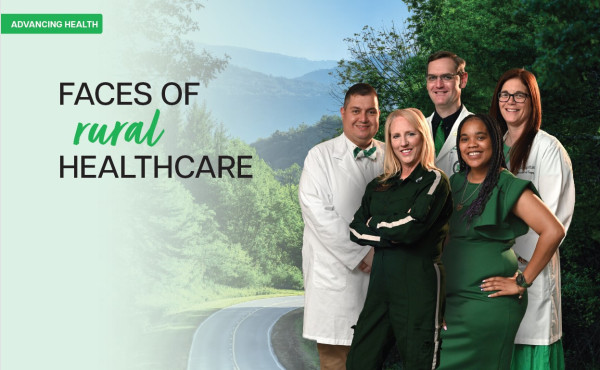
Across rural Appalachia, distance, provider shortages and limited resources can create barriers that affect everything from emergency treatment to preventive care.
Marshall Health Network and the Marshall University Joan C. Edwards School of Medicine have made rural healthcare a top priority — not only through programs and partnerships, but through the people who dedicate their careers to serving rural communities.
From surgeons and primary care physicians to transport nurses and frontline clinical staff, these healthcare professionals are helping expand access and strengthen care throughout West Virginia.
Rural focused training in small communities
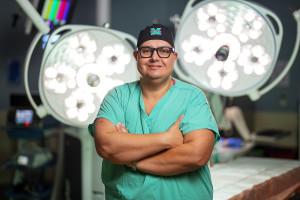 Farzad Amiri, MD, FACS, is a general surgeon at Marshall Health Network and professor and program director for the rural general residency program through the Marshall Community Health Consortium. The residency, established in 2022, is designed to prepare physicians for the realities of practicing in smaller communities. It is the nation's only officially designated and separately accredited by the Accreditation Council for Graduate Medical Education Rural Track Program in Surgery program. Amiri, who grew up in southern Florida, said his experience training at the Joan C. Edwards School of Medicine opened his eyes to the unique needs of rural patients and hospitals.
“A lot of medical students show interest in our program because it provides a broad range of surgical expertise and specialties that they would not normally get as familiar with in residency training,” Amiri said. “Providing care in smaller communities that’s equivalent, if not better, than a larger medical center is the goal.”
Residents rotate between Marshall Health Network-Cabell Huntington Hospital in Huntington, Logan Regional Medical Center in Logan, West Virginia and Holzer Medical Center in Gallipolis, Ohio, gaining hands-on experience in rural environments where adaptability and broad clinical knowledge are essential.
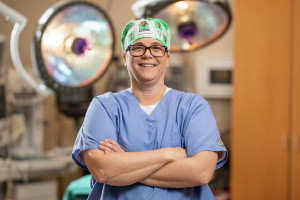 As a Marshall Health Network surgeon based at Logan Regional Medical Center, Jodi Cisco-Goff, MD, FACS, associate professor and associate program director for the residency, understands those realities personally. Raised in Mingo County, West Virginia, Cisco-Goff said she always intended to return home and serve the communities that shaped her.
“I wanted to come home and help my people who helped me and supported me through all those years,” Cisco-Goff said.
For Cisco-Goff, rural medicine requires physicians to think broadly and act decisively, often with limited resources. Rural providers must be prepared to stabilize patients, perform a wide range of procedures and determine when specialized care is needed elsewhere.
“You get to be as much of a general practitioner as you want in a rural setting,” she said. “You’re a doctor and someone who knows how to go fix things.”
 Primary care providers make a major impact in rural communities
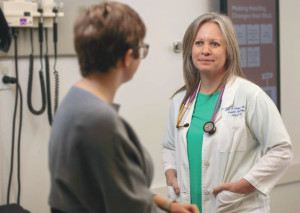
Jill Schenk, MD, CPE, a primary care physician for Marshall Health Network and assistant professor in the department of family and community health, also believes strong rural training is essential to improving healthcare access across the state.
Growing up in rural Tennessee and helping family members navigate specialty care gave Schenk firsthand insight into the burdens many rural families face. Patients often travel hours to access specialists, making local primary care providers critical to the overall health of their communities.
“There’s a bigger weight and a bigger pound-for-pound impact that rural primary care physicians have because they are covering so many bases in the community,” Schenk said.
She believes Marshall’s commitment to rural medicine is helping build a pipeline of providers equipped to meet those challenges.
“The more we can create that pipeline and make people more comfortable with covering a large, broad area of care, the better,” she said.
Schenk works to ensure medical students in the Marshall Family Medicine residency program are well trained in obstetrics and women’s healthcare, because access to hospitals and birthing centers is limited in rural areas. While high-risk pregnancies and substantial complications would require a visit to a specialist, family physicians have the means to help people get OB/GYN care close to home.
“Family physicians can generally handle most things, which keeps folks from having to travel great distances when it is so hard to get care across the country,” Schenk said.
“I could probably do a TED Talk with no preparation about how amazing rural family medicine is. What other specialty can you go from doing a colonoscopy to handling admitting patients to the hospital to handling a trauma in the emergency room to delivering a baby to seeing complex clinic patients in one day? Rural family medicine is one of the most valuable specialties out there."
Nurses are vital on the frontlines
While physicians help shape the future of rural healthcare, frontline nurses like Tammy Zornes, RN, help ensure critically ill patients can access lifesaving care when minutes matter most.
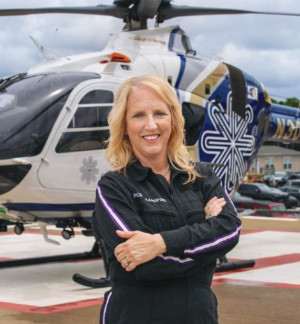 Zornes serves as a PICU transport nurse and brings decades of emergency, flight and pediatric critical care experience to some of the state’s most remote communities. After beginning her career in the emergency department at Marshall Health Network-St. Mary’s Medical Center, she spent 17 years as a flight nurse before transitioning into pediatric critical care transport.
In rural healthcare settings, she said transport nurses often become the entire care team during emergencies.
“When going to these rural areas, the resources are often limited,” Zornes said. “In the rural transport setting, however, you are the ‘team.’”
Working 24-hour shifts, Zornes responds to pediatric emergencies, transports critically ill children by ambulance or helicopter and provides care in highly unpredictable environments. Some hospitals lack specialized pediatric equipment, and in certain remote areas, even cell service can disappear during transport.
Despite those challenges, she says the work is deeply rewarding.
“I can bring the ‘PICU’ to them,” Zornes said. “I can make sure children are getting a higher level of care by transporting them to our facility.”
Zornes also provides outreach and pediatric education to rural facilities, helping local healthcare teams build confidence and strengthen patient care close to home.
Serving patients requires a team of healthcare professionals
At Marshall Health Network-Rivers Health in Point Pleasant, West Virginia, Certified Medical Assistant Chantel Adams serves as another vital link between patients and care.
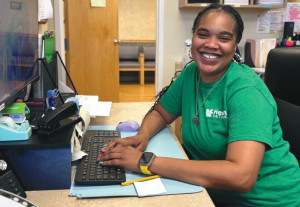 Adams works in the general surgery office helping patients navigate appointments, procedures and follow-up care. Her responsibilities range from patient intake and clinical documentation to assisting with minor procedures and supporting patients receiving treatment for conditions such as varicose veins, hernias and cysts.
For Adams, rural healthcare is about understanding the people behind the medical needs.
“You must understand how your patients are living daily so you can adapt their care to meet their needs,” Adams said.
She says building trust and creating a positive experience for patients is one of the most meaningful parts of her work.
“My passion is people and helping in any way I can,” she said.
Together, these five healthcare professionals represent the heart of rural medicine in West Virginia. Whether training the next generation of rural physicians, transporting critically ill children or caring for patients in local clinics, each plays a role in strengthening healthcare access across Appalachia.
Their stories reflect a shared commitment — ensuring that no matter how small the town, quality healthcare remains close to home.
More news...

Marshall Health Network Foundations launches holiday toy drive to brighten season for hospitalized children
Marshall Health Network, The Greenbrier Clinic sign letter of intent
Marshall Health Network Clinic & Office Closures for Thanksgiving Holiday
Marshall Health Network, Huntington City Mission open West Virginia's first integrated-model medical respite care facility
Marshall University, Marshall Health Network to receive nearly $13 million for rural health transformation initiatives

Stay on Your Feet: Preventing Slips and Falls in Cold Weather
Marshall Health Network names Joshua Weber chief pharmacy officer